Pause, Rewind, Replay
The first Rush show I ever “saw” was Exit… Stage Left, played off a well-loved VHS cassette at the house of my friend Donald, who’d already been a Rush fan for a year or two by then. I would have been about 12 years old when I was exposed to this strange music that told tales of cars running away from robots, with odd time signatures, made by three strange-looking and strange-sounding dudes from the Toronto suburbs.
I’d certainly had my own prog-rock leanings even before then, having listened to a decent amount of Yes and The Who, and, God forgive me, Styx. But Rush was different. And weirdly enough, as much as I was drawn to the musicianship, I also found myself paying a lot more attention to the lyrics, which was something I hadn’t done as much with those other bands.
The words were something you could actually dig into. And over the years, you could see Neil Peart’s growth from adolescent intellectual rebellion into much deeper examinations of society and fame, relationships and loss. Each album gave you something to sink your intellectual teeth into.
And of course, for those of us who were budding guitarists and bassists, the music was challenging in different ways. These weren’t cowboy chords. These weren’t just fifth chords. These were chords that forced you to think about the interrelationship between what was happening on the different strings. These weren’t solos that were just thrown together. This was music that was composed, but composed by people who were also very clearly having an absolute amount of fun.
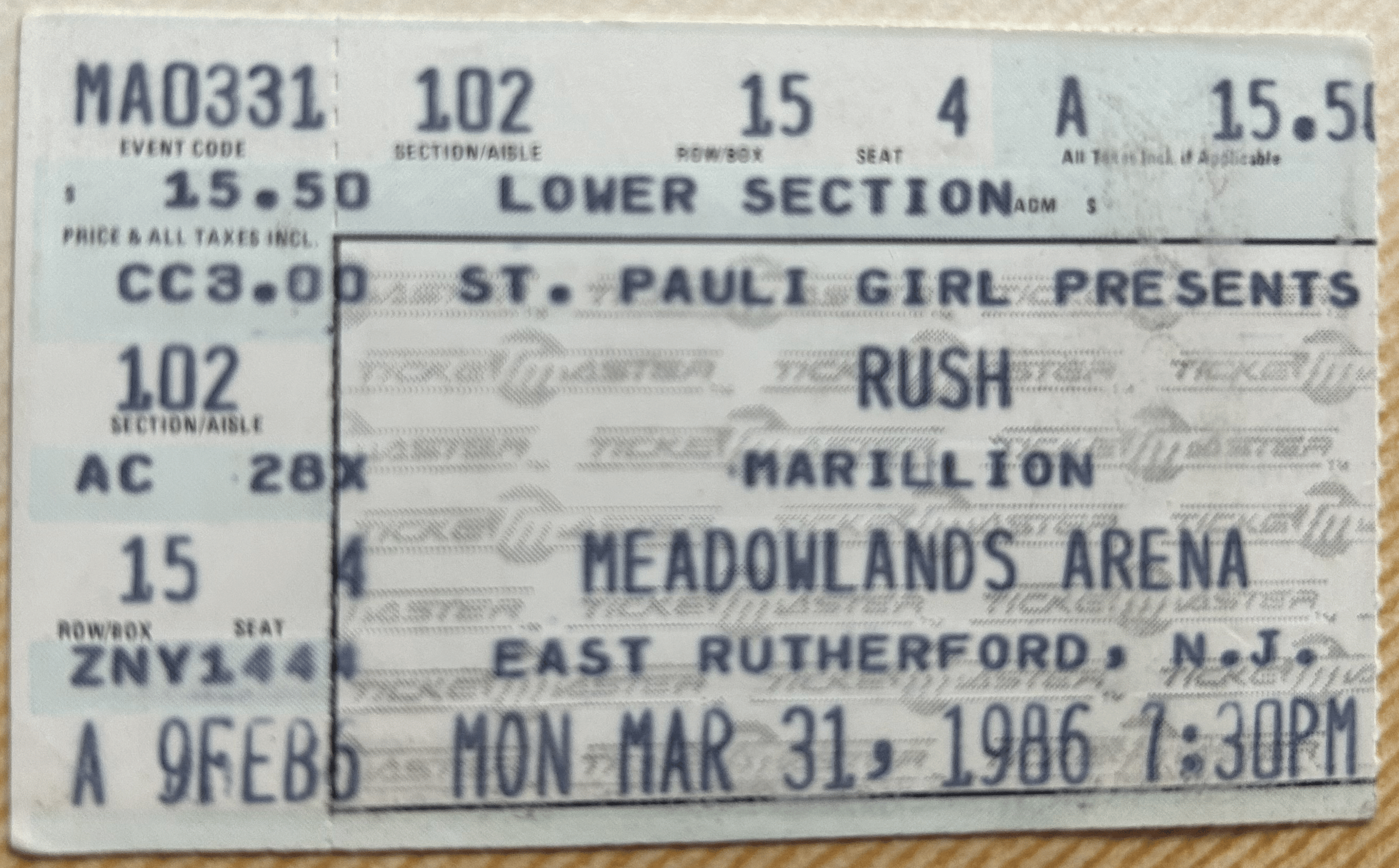
As I grew up, I ended up actually seeing them in person a good seven or eight times, many of those times with Donald, and with my other good friends Jason and Chris, and others who would be brought along the way.
And then 2015 came.
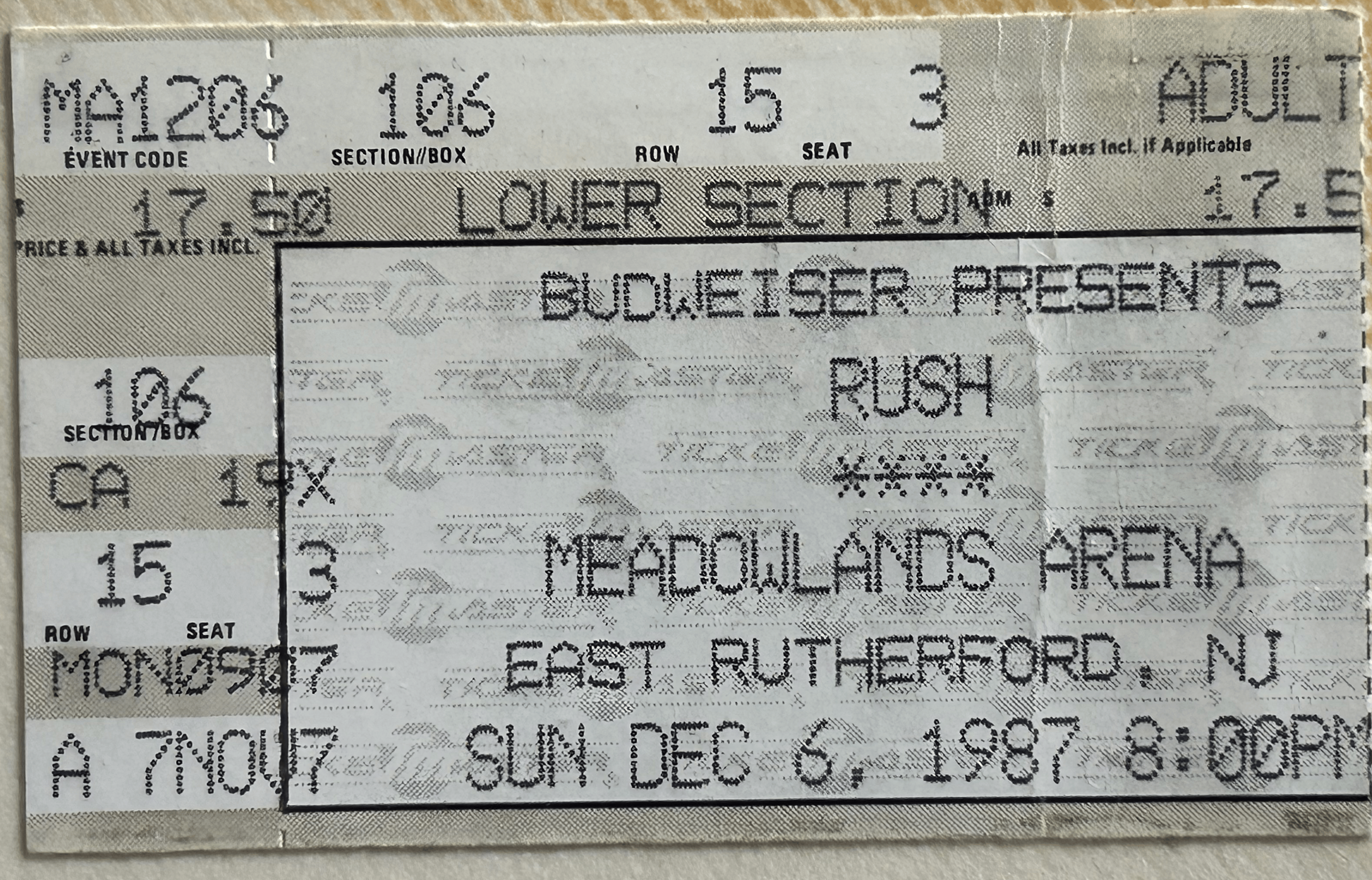
There was word of an R40 tour being planned, and it felt like this might be the last time to see them. I remember sitting there in TD Garden, watching all these fantastic memories go by on the projection screens as I listened to my favorite band play the music of my adolescence, my young adulthood and, by then, even my middle adulthood.
At the end of that tour, at the last show in Los Angeles, Neil came out to the front of the stage.
He had never done that before, and we all knew what it meant.
It was over.
Then came the news in January 2020 that Neil had died of glioblastoma. Cruelly, it was the same cancer that had taken Gord Downie two and a half years earlier and was, at that very moment, taking my friend Donald. Don died just a few months later, and because of COVID, we weren’t able to celebrate his life until a year and a half after that.
People wrote books about Rush, encapsulating the history. Geddy wrote his own effin’ autobiography, telling the story of the band from his vantage point. It felt like time had moved on.
And that was okay. I could still listen to the music, and all the memories were still there and still real.
Then, in 2025, Geddy and Alex put out a video of the two of them goofing around at one of their houses, jamming and being stupid, which they are very lovely at doing. Geddy stopped at one point, noted just how bad the jam was, and said they had some things they wanted to tell us.
And then Alex yelled, apparently out of nowhere: “We’re going on tour!”
All of us in the Rush-verse, I think, stared at our screens for the next five minutes completely uncomprehending.
How could this possibly be?
Neil was gone. How could they tour?
We knew they had gotten together to play at special events (the Taylor Hawkins tribute concerts, for example) but a Rush tour?
Over time, we learned a little more about what was going on. At those events, Geddy and Alex had realized how much they really missed playing with each other, and playing in front of crowds. They had found a drummer, Anika Nilles, who had played with Jeff Beck and seemed to be absolutely fit for purpose.
Of course many of us fans had questions and concerns. But a refreshing number of us also recognized that it was Geddy and Alex’s call to make. And if they felt Anika was the right person, then we very likely had something to look forward to.
The ticket process was ridiculous.
At first, the band announced only about 25 shows. I remember sitting on the Ticketmaster site, and as soon as the sale opened I jumped online, watched that little circle spin and then discovered that I was approximately 65,000th in line.
So that was simply not going to happen.
Then they announced another round of shows. I tried again. This time I got to maybe 40,000th in line, but by the time I got through, everything under about $400 a seat was gone.
So I said to myself: Well, clearly they’re going to record this at some point. I’ll enjoy that, just the same way I enjoyed Exit… Stage Left all those years ago.
But the band kept paying attention to the fact that fans wanted to see them and were frustrated by the process, so they kept adding shows.
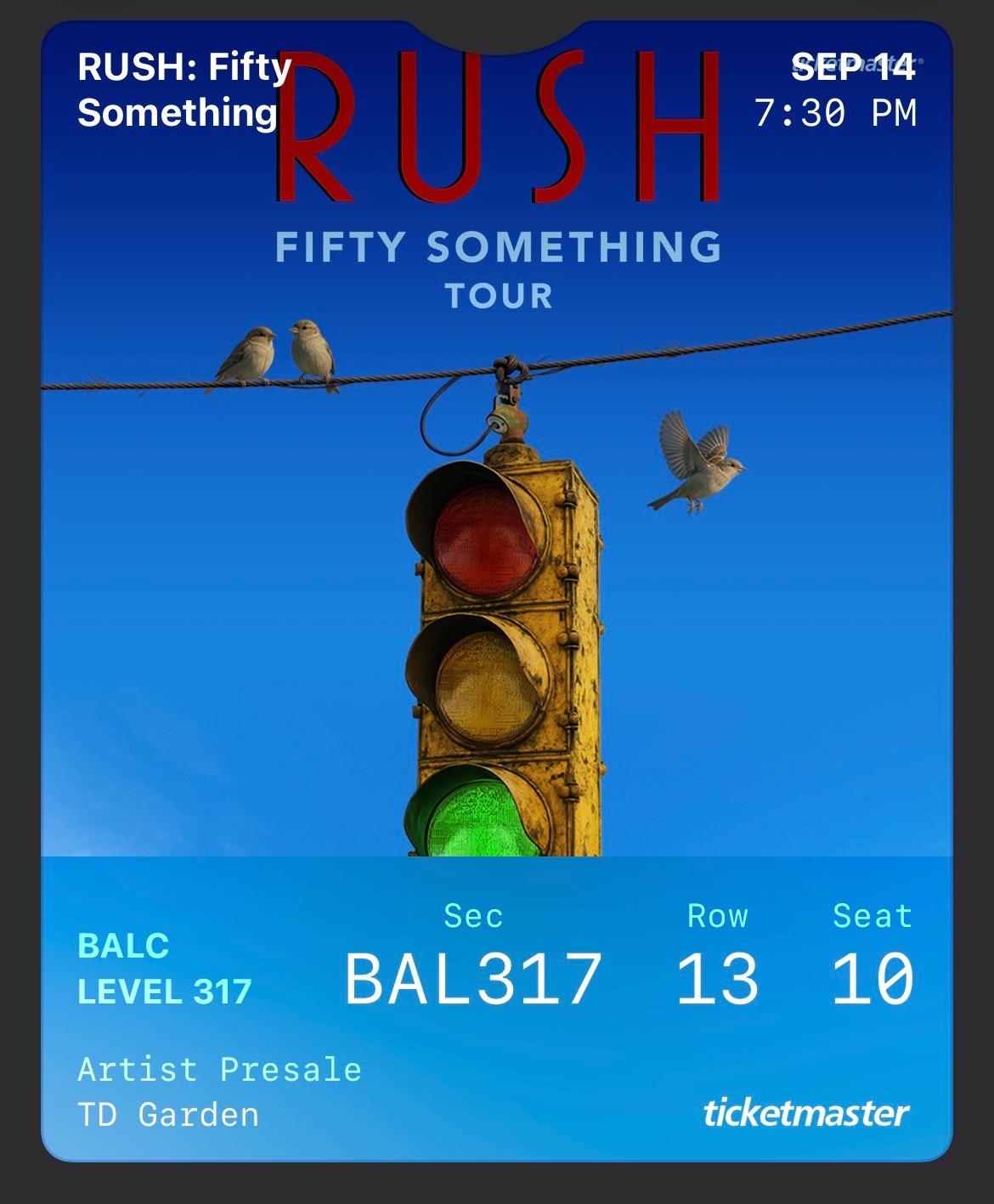
And finally, I got two seats for the second Boston show.
Jen had never seen Rush live, so this was going to be her first opportunity as well. They weren’t front-row-center seats or anything remotely like that. They were upper deck, stage right — very much like the tickets I would have been able to afford when I was a kid.
Which, as it turned out, was absolutely perfect.
This past Monday was the show. And because of a variety of logistical challenges, not least of which was a persistent cold, I had started to wonder whether it was actually going to happen.
But it did.
Jen and I showed up and got into our seats. The screens counted down toward the start of the show, and then the opening film began.
It was the kind of very silly thing Rush became known for over the years and clearly loved doing: a little comedy bit to start things off.
Then the fog machines started on stage.
And the opening notes of “Xanadu” began.
I was completely overwhelmed.
Even now, just remembering it, I am again.
In that moment, I wrote:
“Am I crying? Am I thinking of who I’ve been here with before? Of who should still be here? Of who is here with me? Am I crying? Am I laughing? Am I singing? Yes.”
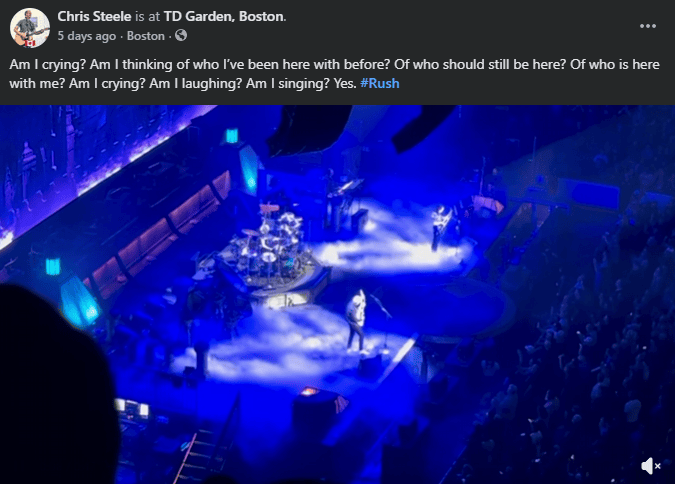
It’s hard to say whether I somehow turned a three-hour Rush show into an opportunity to process years and years of memories and unresolved questions.
Actually, no. It’s not that hard to say. I clearly did.
What’s easier still to say is that this band is incredibly important to me.
Anika absolutely owned her parts and blew us all away. More than that, she brought a sense of humor along with the astonishing technical precision, both of which made it very easy to understand why Geddy and Alex wanted her there. Loren Gold on keyboards not only gave Geddy the flexibility to step out more from behind the keyboards, but brought another layer of musicianship that added to the entire experience.
And Geddy and Alex? They looked happy- really happy!
That may have been the most important part.
They were playing this music again not because the intervening years hadn’t happened, and certainly not because Neil could somehow be replaced. He couldn’t be, and he wasn’t.

They were playing because the music was still theirs. Because they still loved playing it. Because apparently there was still something left to say.
And maybe that’s what I was reacting to when those first notes of “Xanadu” came through the fog.
When I was 12 years old, sitting in Donald’s house watching a battered VHS copy of Exit… Stage Left, I couldn’t possibly have imagined all the things that would happen between that moment and this one. I couldn’t have imagined the friends I would make, the people I would lose, the person I would become, or the countless times this music would accompany me through all of it.
I certainly couldn’t have imagined that more than 40 years later I would be sitting high above another Rush stage, this time beside Jen, hearing those songs played live again.
There is no rewind button for any of that.
Donald is still gone. Neil is still gone. Gord is still gone. The kid sitting in front of the VHS player is gone too, at least mostly. Time does in fact not stand still, and no reunion tour gets to change that.
But sometimes, improbably, you do get to press play again.
And the song isn’t exactly the same, because neither are you.
But… you listen with everyone you’ve ever been. You listen with everyone you’ve lost. You listen with the person sitting beside you now.
And for three hours on a Monday night in Boston, somehow, they are all there.